


 Industry Insider
How André Beekmans Built The Art of Light Into A Global Creative Force
With credits spanning Armin van Buuren, EDC Las Vegas and Eurovision, Beekmans discusses innovation, team building and the future of live event design
For more than two decades, André Beekmans has been helping shape the visual language of live music. As founder and creative director of The Art of Light, the Dutch lighting designer has grown a freelance operation into an internationally recognised company behind productions for Armin van Buuren, A State of Trance, EDC Las Vegas, Untold Festival, Eurovision and many more.
Driven by a passion for creativity, technology and audience experience, Beekmans sees lighting as far more than a technical element. It is a tool for creating identity, emotion and connection between artists and their audiences. In this Industry Insider Q+A, he reflects on leadership, innovation, the future of live events and the principles that continue to guide his work across some of the world's biggest stages.

Q+A: André Beekmans
How do you explain your work to people outside of the industry?
I’m a creative international light designer for shows and concerts. We’re adding an extra visual dimension to music experiences.
Can you walk us through your journey into the music industry? What were the key moments that defined your path?
I discovered my interested into light and sound equipment at a young age. When I was 14 years old, I started as volunteer in a local theatre where I really fell in love with all the possibilities of light. This theatre was the perfect location to see other people working with lights and assist them.
I was always welcome there and they taught me the ins and outs of theatre lighting. When I was around 17 years, I started working for rental companies where I developed my rock n roll way of lighting bands, started touring with bands, theatre shows.
The Art of Light has grown from a freelance operation into a company working on some of the world's biggest shows. How has your role evolved as the business expanded, and what have been the biggest lessons in leading a creative team?
The coordination and communication became a big part of my role. Before I did everything myself and later, I had to explain and share my vision to the team, to the programmers. I partly stepped away for the operator part so I could focus on the designing and managing part.
I learned quite quickly that my passion is not in the managing role but more creative and technical. So, I worked on creating a team to support me, like now I have Romy on my side for the full operation of the company so I can focus on everything creatively.
It’s important to work with a qualified team with a lot of experience and the same mindset.
What are the biggest challenges you face in your role, and how do you navigate them?
Because a lot of people saw me as the face of the company everyone was expecting to see me on all productions.
Nowadays it’s accepted and trusted by our clients that we have a good team so it does not matter who will do the projects: they trust us a company.
But I’m trying to be involved with as many projects as possible but time is limited and to be creative you need to have headspace / time to develop.
How do you define success in your work, both for your organisation and for yourself?
Feeling passionate, thinking along with all involved parties and going for the best result.
It is not always the easiest. And because we work for artists and promoters, we’re not limited to rental companies and production companies.
There's plenty of doom mongering about the live events industry. What positive trends do you think are shaping its future for the better?
Artists and visitors will be choosing to go to less shows but the shows they are attending need to be of a better quality.
There will probably be less shows, but the level will be better. Better vision behind the shows and everyone will be working on their vision and create their own signatures to stand out.
How important are adaptability and continuous learning in your role, and what have you learned recently?
Developing is the most important: the technical aspect of our is constantly in development, constantly changing and improving: new light fixtures, new software, new technologies.
And besides that, creatively we need to understand the new music styles and lifestyle directions.
What advice would you give to people trying to build a career in music outside of DJing?
Follow your dream/passion and not the money. Believe in yourself, work hard, try to build a network and let them know where you’re into and go for the best.
The music industry is a combination of communication/networking, technical knowledge, creativity. Try to find a good balance of the different fields.
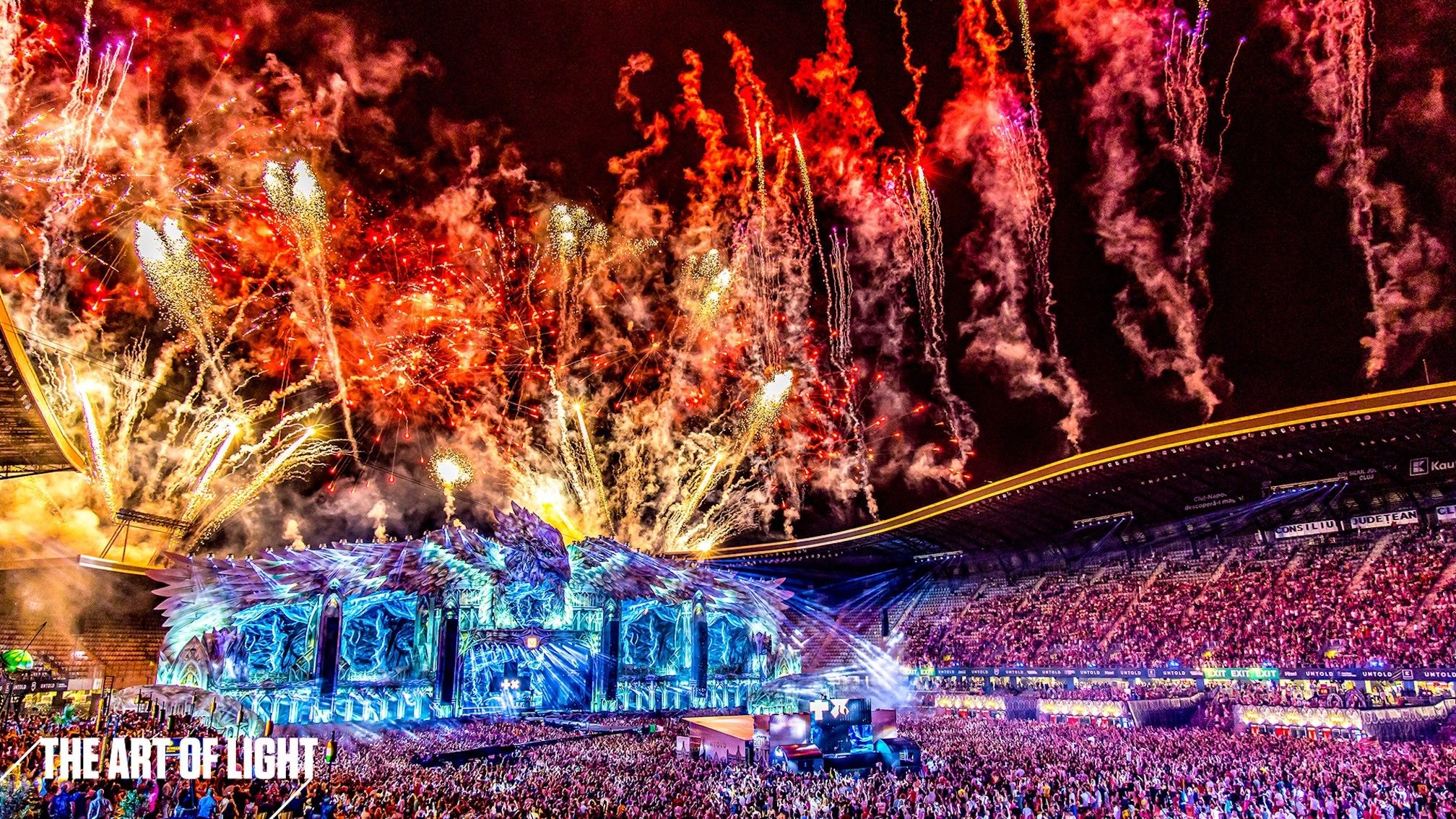
When designing for artists, festivals and large-scale productions, how do you translate an artist’s identity into a lighting experience that audiences immediately connect with?
That’s always a different trick: one time choose a custom set of colour, the other moment it will be a shape or materials. That’s the challenge every time how to make that connection with the stage, lighting and the artist or brand identity.
How do you personally stay connected to the culture and the community?
By continuing to visit concerts, festivals, events and museums myself as well whenever I have some free time.
Next to that I’d like to stay in touch through social media: engage with artists, followers, the community but I also use social media for inspiration.
Lighting technology is evolving rapidly. Which innovations have genuinely transformed the way you design shows, and which developments are you most excited about for the future?
First of all, the visualisation tools: This makes it easier to present our ideas to our clients, so they fully understand and see our vision as we have in mind. With those tools we can test our ideas too in a virtual world.
Besides that, all the equipment is getting so much better, brighter and new ideas, shapes and lights will innovate.
How do you personally stay focused, grounded and mentally sharp in such a demanding role?
This is quite challenging, especially during the busy months.
However, I do try to take good care of myself by eating healthy most of time, working out and still reserve some time here and there to go on a holiday to practice my favourite hobby: kitesurfing.
Sometimes stepping away from the office physically gives me the ability to break free, think even more creatively out of the box and gives me time to refocus.
Having worked across festivals, arena tours, televised productions and immersive concert experiences, what design principles remain constant regardless of the scale of the production?
Some parts stay the same for every show: First is how to make the artist/object visible for the crowd and then how to create that extra dimension with effect lights to the performance.
What traits do you think make a great business person within the dance music industry?
The most important thing you need within this industry is passion. Without, you probably won’t last long.
Secondly, as I mentioned before, communication and networking are important as well as technical skills.
So, combining those three traits would make a great businessperson within the industry.
What advice would you give to young people hoping to build a career in the electronic music industry at a company like yours?
Be willing and open to learn. There is only a small amount of theoretical knowledge within the industry, most of it is learned on the job, in the field.
So, make sure you learn there from everyone around you. Furthermore, be prepared to work hard: long hours, long days are part of the job.
Oh and don’t forget to enjoy! But you will, if you’re passionate about what you do.
The audience often remembers the artist on stage, but the visual experience plays a huge role in how a show is remembered. What do you think great lighting design adds to a performance that people may not consciously realise?
For big stadium shows the crowd will sometimes be too far away of the artist to recognize them but people know that’s the artist by seeing that person in this signature lighting/stage.
Photos: The Art of Light / Divulgação
